


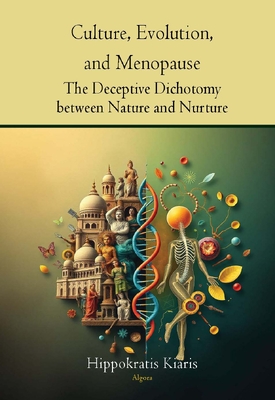


Sound Bite
Culture and biology appear to have antagonized each other since the earliest stages of human history. Is this actually the case? Once the reproductive age is past, does nature have any “purpose” in prolonging life? A prominent biologist examines how humans have always tried to overcome the burden of biological limits by developing science, technology—and communities.
By now, humans have defeated the typical logic that guides evolution by canceling the translation of potential differences in biological performance (fitness) into differences in reproductive success. This disruption of the link between biology and fate results in an existentialist crisis; to resolve it, people must re-examine their position in the world and their individual and collective goals.
About the Book
In Culture, Evolution, and Menopause, Prof. Kiaris focuses on the crossroads of anthropology, the history of civilization, and evolutionary biology. Culture is usually seen as opposing biological imperatives. Humans have always tried to overcome the burden of environmental and their own biological limits, by developing science and technology, and by building communities. The culture of care that humanity established supersedes the biological costs and benefits that govern life for other species. Thus, humans have founded a new trajectory within which biology becomes of lesser significance.
This book re-examines these perceptions to conclude that the traditional dichotomy between nature and nurture is a false one. Nurture represents an indispensable component of human nature.From a biological perspective, this “nurturing nature” sets as its objective the elimination of the impact of natural selection, aiming for the perseverance of our species against all forces that may instruct otherwise. By canceling the translation of potential differences in biological performance, or fitness, into differences in reproductive success, humans for the first time on earth have defeated the typical logic that guides evolution.
This disruption of the link between biology and fate results in an existentialist crisis; to resolve it, people must re-examine their position in the world and their individual and collective goals.
The book starts with a discussion of the concept of randomness and how this applies to biology; then it delves into a description of how the culture of care dominates the history of H. sapiens. Focusing on the West, intrinsic controversies of modernity are discussed such as the concurrent pursuit of reason and individual advancement, or the annulment of the interpretation of resource abundance into population growth. Kiaris also discusses globalization and its implications on culture, society, and gene exchange. The book concludes with some paradoxical consequences of the defeat of evolutionary logic and the emergence of biological existentialism as the overarching state of our being.




Reviews
There are no reviews yet.