About the author

Hamid Karimianpour

Hamid Karimianpour is a political activist and author with an interest in current affairs and international politics. Karimianpour was born in Iran, where he experienced major political and cultural transformations firsthand following the 1979 Islamic revolution. While still a teenager, he immigrated to Europe. He studied philosophy and economics at the University of Oslo in Norway and did postgraduate studies in philosophy at the University of Hull in the UK . Now an academic residing in Virginia, he has written and edited numerous articles on political and philosophical themes.

Sound Bite

Despotism, fundamentalism, and the rise of terrorism have created a puzzling moral question in the twenty-first century: how far should America go to help press ahead political and cultural change in the world?

This book explores five major historical transformations over the past two centuries and demonstrates the significance of internal leadership for social, political, and cultural change. The reader will discover that "while international pressure has often played a pivotal role in encouraging change," peaceful democratizations are historically not imposed from outside but are initiated and executed by leaders within the old system.

About the Book

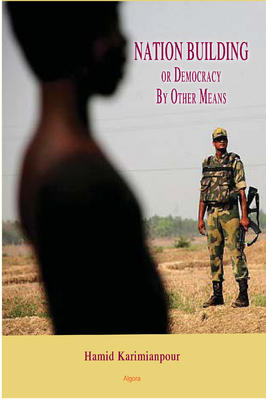
What does it actually take for a society to change? And how much can outside forces — especially the United States — really do to push that change along? These are the central questions Hamid Karimianpour wrestles with in this ambitious, wide-ranging study that draws on five major historical transformations to argue that lasting political change has to come from within.

Karimianpour walks through the American abolitionist movement, the waves of feminist activism that reshaped gender equality, Gorbachev's unraveling of the Soviet Union, the fall of apartheid in South Africa, and the long, complicated history of Iran's relationship with the West. In each case, he looks at what actually drove change — and what didn't. His consistent finding is that internal leadership and internal mobilization matter far more than foreign pressure or military intervention. The lessons from Nelson Mandela's South Africa or Gorbachev's glasnost don't translate neatly into a justification for nation building from the outside.

The section on Iran is particularly detailed, tracing the origins of enmity between Iran and the West through the CIA-backed coup, the rise of the Islamic Republic, and the ongoing nuclear standoff. Karimianpour asks hard questions about whether American involvement has helped or deepened the crisis.

Written in clear, direct language, this is a book for readers trying to make sense of democracy promotion, regime change, and why well-intentioned interventions so often go wrong. It challenges the assumption that democracy can be delivered by other means.

Additional information

Weight N/A
Book Type Ebook, Hard cover, Soft cover
Pages

252

Release Year

LC Classification

JC423.K284 2011

Dewey code

321.8–dc22

BISAC I

POL007000 POLITICAL SCIENCE / Political Ideologies / Democracy

Reviews

There are no reviews yet.

Be the first to review “Nation Building”

Your email address will not be published. Required fields are marked *

Related books