About the author

Musa Khan Jalalzai

Musa Khan Jalalzai is a journalist whose experience includes over 25 years of extensive research in political analysis, Afghanistan, terrorism issues, and human trafficking. His articles have been published by The New Yorker, the New York Times, and Moscow Times (English-language daily). He has published several books studying sectarian and ethnic violence, policing, and terrorism in various parts of the world, as well as the increasing crime, corruption and instability in Pakistan, Afghanistan and the region.
During the First Gulf War (1991-1993) Musa Khan Jalalzai was a research scholar at the Pakistan Institute of National Affairs focusing on Persian Gulf politics. He was Executive Director of the Daily Outlook, Afghanistan (2005-2009), and regularly publishes articles in Pakistan’s daily The Post. He has a regular column in the Daily Times (Lahore, Pakistan) and The New Nation (Bangladesh). Mr. Jalalzai has published several books with Algora focusing on Pakistan, Afghanistan, and questions of international security, law enforcement, and the global intelligence war.

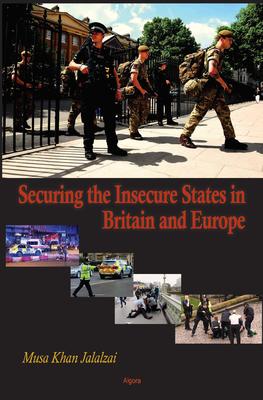
Securing the Insecure States in Britain and Europe

Price range: $19.95 through $29.95

Britain and the EU member states have been engaged in an intense debate over the flood of refugees and immigrants, which has gone hand-in-hand with an increase in organized crime including people trafficking and smuggling as well as terrorist attacks.

Read More

Sound Bite

The spate of recent terrorist attacks in London, Paris, Brussels and Berlin highlights the security crisis in Britain and the EU member states. The author points to weaknesses in intelligence sharing and cooperation at the law enforcement level. He shows that these shortcomings are both rooted in, and contributing to, misunderstanding and distrust among the EU member states. At the same time, these attacks showed how urgent is the need for strong and professional law enforcement across the continent.

About the Book

Britain and the EU member states have been engaged in an intense debate over the flood of refugees and immigrants, which has gone hand-in-hand with an increase in organized crime including people trafficking and smuggling as well as terrorist attacks. Europe's habitual calm and reliable law and order are deteriorating, while member states wonder what they sacrificed their sovereignty for, if cooperation is so poor even in the essential area of security?

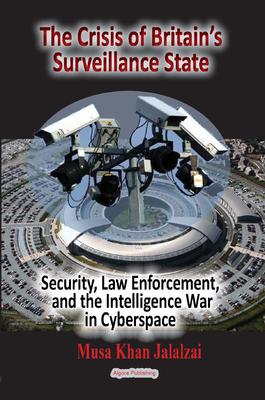
The UK has more CCTV cameras than anyone else, monitoring citizens day and night. Even so, notwithstanding the ubiquitous MI6, MI5, GCHQ, MENWITH HILL, and the UK police, Britain still can;¢t prevent attacks. What is the use of such heavy-handed surveillance, if there is such poor result in crime prevention?

International journalist Musa Khan Jalalzai presents a flood of facts illustrating the parlous state of affairs and asks readers to evaluate for themselves whether the security benefits have been commensurate to the loss of privacy and sovereignty.

About the Book

Europe has been shaken by a wave of terrorist attacks — London, Paris, Brussels, Berlin — and the question journalist and security analyst Musa Khan Jalalzai keeps coming back to is: why aren't the existing systems working? Written in the shadow of Brexit and published in 2017, this book takes a hard look at how Britain and EU member states are failing to keep their citizens safe, and whether the massive security apparatus they've built is actually fit for purpose.

Jalalzai walks through the machinery in detail — MI5, MI6, GCHQ, the surveillance hub at Menwith Hill, the Investigatory Powers Act (dubbed the "Snoopers' Charter"), and bulk data collection programs shared between British and American agencies. Britain has more CCTV cameras per capita than almost anywhere in the world, yet attacks still happen. The author argues that the real problem isn't a lack of surveillance tools — it's poor intelligence sharing, institutional distrust between member states, and the radicalization pipeline that keeps producing homegrown ISIL-linked fighters who travel abroad and return to Europe.

Brexit makes everything harder. When Theresa May triggered Article 50 in March 2017, she effectively threatened to pull Britain out of EU-wide law enforcement cooperation. Jalalzai examines what that would mean for counterterrorism, cyber warfare preparedness, and the containment of biological, chemical, and radiological threats. He doesn't offer easy answers, but he lays out the stakes clearly for anyone trying to understand how European security got this fragile.

Additional information

Weight N/A
Book Type Ebook, ePub, Hard cover, Soft cover
Pages

204

Release Year

BISAC I

POL069000 POLITICAL SCIENCE / Public Policy / Military Policy

Reviews

There are no reviews yet.

Be the first to review “Securing the Insecure States in Britain and Europe”

Your email address will not be published. Required fields are marked *

Related books