About the author

Musa Khan Jalalzai

Musa Khan Jalalzai is a journalist whose experience includes over 25 years of extensive research in political analysis, Afghanistan, terrorism issues, and human trafficking. His articles have been published by The New Yorker, the New York Times, and Moscow Times (English-language daily). He has published several books studying sectarian and ethnic violence, policing, and terrorism in various parts of the world, as well as the increasing crime, corruption and instability in Pakistan, Afghanistan and the region.
During the First Gulf War (1991-1993) Musa Khan Jalalzai was a research scholar at the Pakistan Institute of National Affairs focusing on Persian Gulf politics. He was Executive Director of the Daily Outlook, Afghanistan (2005-2009), and regularly publishes articles in Pakistan’s daily The Post. He has a regular column in the Daily Times (Lahore, Pakistan) and The New Nation (Bangladesh). Mr. Jalalzai has published several books with Algora focusing on Pakistan, Afghanistan, and questions of international security, law enforcement, and the global intelligence war.

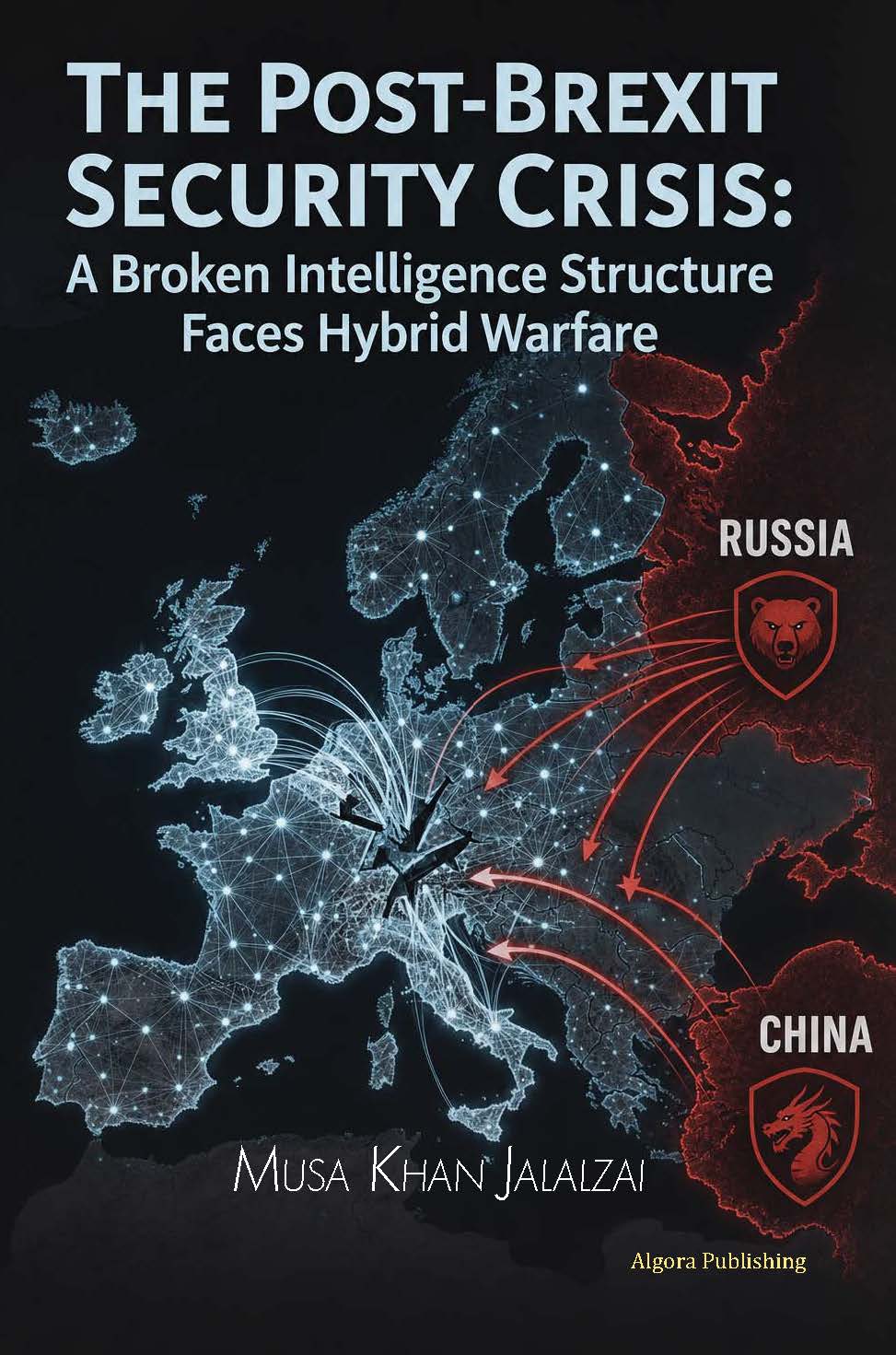
The Post-Brexit Security Crisis

The 2016 Brexit referendum did more than sever political and economic ties—it fractured the foundation of Euro-British intelligence cooperation.

Read More

Sound Bite

This book analyzes the fracturing and reconstruction of Euro-British intelligence cooperation following Brexit. It examines European security architecture, digital border management, and national intelligence reforms while addressing the escalating threats of Russian, Chinese, and Iranian cyber espionage and hybrid warfare against the UK and EU.

About the Book

The 2016 Brexit referendum did more than sever political and economic ties—it fractured the foundation of Euro-British intelligence cooperation. For decades, the United Kingdom was a central pillar in the European security architecture, sharing vital data through Europol, Eurojust, and the Schengen Information System. When those formal structures unraveled, a dangerous intelligence gap emerged just as global hybrid threats began to escalate.

This comprehensive analysis examines the profound transformation of European security in the twenty-first century. It investigates how the UK and EU are navigating a fragmented relationship while fighting relentless Russian espionage, Chinese cyber networks, and Iranian covert operations. Readers will uncover the real-world consequences of losing real-time data access, and how interpersonal trust is keeping cross-border counterterrorism efforts alive despite the political divorce.

The text covers a wide array of critical security developments, including the digital transformation of EU border management, the New Pact on Migration and Asylum, and national security sector reforms across France, Germany, Poland, Bulgaria, and the Baltic States. It also brings historical context to modern challenges, detailing secretive intelligence-sharing mechanisms like the MAXIMATOR alliance and tracing Cold War tradecraft from Operation Jungle to today’s state-sponsored disinformation campaigns.

Written for policymakers, security professionals, academics, and readers fascinated by geopolitics and international relations, this book presents a stark reality: security in Europe is only as strong as its weakest link. As adversaries weaponize technology and exploit political divisions, understanding the fragile state of modern intelligence cooperation is absolutely essential. This timely work provides the insights needed to grasp the future of state security, counter-espionage, and collective defense in a rapidly shifting landscape.

Additional information

Release Year

Reviews

There are no reviews yet.

Be the first to review “The Post-Brexit Security Crisis”

Your email address will not be published. Required fields are marked *