




Sound Bite
Is the dollar losing its luster as the world's reserve currency, and is deficit spending really a crime? Author Lew Kaplan doesn't think so. What's more, Kaplan points to the urgent need to outperform Communist Russia as the stimulus that drove the United States to develop so aggressively and successfully in the 20th century.
The author traces 20th century history and argues that US prosperity is inexorably linked to the US deficit and that any movement toward reducing the deficit will negatively impact the domestic and global economy; and he credits Stalin's missteps and the onset of the Cold War for the economic impetus that made the US economy such an outstanding powerhouse.
About the Book
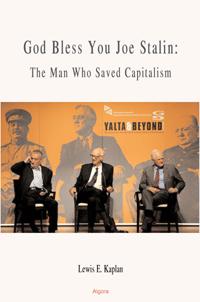
What if the collapse of the Soviet Union wasn't the inevitable victory of Western capitalism, but rather the unintended consequence of Cold War policies that actually strengthened American economic power? God Bless You Joe Stalin; The Man Who Saved Capitalism challenges conventional wisdom by examining how Joseph Stalin's aggressive expansion of Soviet influence inadvertently triggered the forces that transformed and saved capitalism itself.
From the Bretton Woods conference of 1944 through the Reagan presidency, Lewis E. Kaplan's provocative work traces how the dollar emerged as the world's supreme currency—not through design, but through the competitive pressures of the Cold War arms race. While the Soviet economy remained compartmentalized and static, American innovation spilled into the civilian sector, creating unprecedented prosperity. The author shows how deficit spending, initially justified by military competition, became the engine driving American economic growth and consumer culture.
The book offers surprising perspectives on familiar historical figures and events. Eisenhower's "Atoms for Peace" proposal backfired and accelerated the Soviet arms race. Kennedy's presidency is examined through the lens of his father's political machinations. Nixon's abandonment of the gold standard—a decision that seemed catastrophic at the time—actually liberated the American economy to pursue new models of growth based on consumer debt and service industries rather than manufacturing.
Kaplan presents Stalin not as a simple villain but as a pragmatist attempting to build a viable socialist state. He argues that understanding Stalin's actual motivations and methods, rather than viewing him through a moral lens of good versus evil, reveals how his policies inadvertently benefited Western capitalism. The author examines how American retailers, manufacturers, and financial institutions adapted to changing circumstances in ways that Soviet planners simply could not.
The narrative extends through the Reagan years and the eventual Soviet collapse, explaining why the American economy—despite persistent trade deficits, declining manufacturing, and mounting national debt—continues to drive global economic growth. Kaplan argues that this apparent paradox reflects capitalism's fundamental flexibility compared to communism's rigid ideology.
Whether you're interested in Cold War history, economic policy, or understanding how the modern global economy actually works, this book offers unconventional analysis grounded in specific historical events and economic data.
Table content
Introduction Chapter 1. Evolution of the Almighty Dollar Chapter 2. The Amazing American Economy Chapter 3. Beyond Good and Evil: A Different Portrait of Joe Stalin Chapter 4. The Contradictions of State Socialism Chapter 5. The Cold War Begins: The Truman Presidency Chapter 6. The Cold War in Neutral: The Eisenhower Presidency Chapter 7. Expanding the Cold War: The Kennedy Presidency Chapter 8. The Great Society: The Johnson Presidency Chapter 9. The Renegade Republican: The Nixon Presidency Chapter 10. Frustration: The Presidencies of Ford and Carter Chapter 11. America on the Attack: The Reagan Presidency Chapter 12. The End of the Cold War: The George H. W. Bush Presidency Appendix: Tables
Information
"John Lipsky, first deputy manager of the [IMF] said the fund did not think there was a serious risk of the dollar losing its reserver currency role. 'Notwithstanding the dramatic claims by some, there is no doubt that the dollar will retain the central role,' he said." -- Financial Times, July 23, 2008, page 1.



Reviews
There are no reviews yet.