About the author

Musa Khan Jalalzai

Musa Khan Jalalzai is a journalist whose experience includes over 25 years of extensive research in political analysis, Afghanistan, terrorism issues, and human trafficking. His articles have been published by The New Yorker, the New York Times, and Moscow Times (English-language daily). He has published several books studying sectarian and ethnic violence, policing, and terrorism in various parts of the world, as well as the increasing crime, corruption and instability in Pakistan, Afghanistan and the region.
During the First Gulf War (1991-1993) Musa Khan Jalalzai was a research scholar at the Pakistan Institute of National Affairs focusing on Persian Gulf politics. He was Executive Director of the Daily Outlook, Afghanistan (2005-2009), and regularly publishes articles in Pakistan’s daily The Post. He has a regular column in the Daily Times (Lahore, Pakistan) and The New Nation (Bangladesh). Mr. Jalalzai has published several books with Algora focusing on Pakistan, Afghanistan, and questions of international security, law enforcement, and the global intelligence war.

Sound Bite

The Pakistani state is in trouble, riven by power struggles and social conflict. Regionalism, ethnic division and sectarian partisanship within the armed forces have added up to a political and economic breakdown and a complex civil war.

About the Book

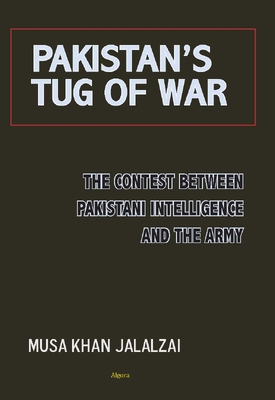
The competition between the armed services and the Pakistani intelligence services, both civilian and military, has kept Pakistan locked in turmoil. Here, a lifelong analyst of Pakistani politics and society reflects on the complex interplay of military, political, and societal factors in the country.Musa Khan Jalalzai explains the political and security situation, the impact on society of torture and enforced disappearances, the ongoing conflict in Balochistan and Afghanistan, and the implications of state-sponsored terrorism. The Army and the intelligence community are both involved in criminal conduct against citizens, revealing a profound lack of strategic direction for these institutions. He draws a line from Zia-era extremism to expanding terrorism under Pervez Musharraf, pointing out the lack of industry, economic stagnation, huge running deficits, and public debt reflecting a failure to strive for the public good. Political instability, corruption, incompetence, and control by the agencies are the guiding realities, not a policy to promote public welfare.

About the Book

Pakistan has long been described as a failing state, but Musa Khan Jalalzai goes further — arguing that the country is actively being pulled apart by the institutions supposedly responsible for holding it together. The central conflict here is between Pakistan's military and its sprawling intelligence apparatus, including the powerful ISI and the civilian Intelligence Bureau, whose rivalry and competing agendas have paralyzed governance and fueled violence across the country.

Jalalzai, a veteran analyst of South Asian security, traces how decades of institutional dysfunction have produced a state where enforced disappearances and torture are standard tools of control, where Balochistan is effectively run as an open prison, and where the army has conducted major military operations — Zarb-e-Azb in North Waziristan, Rah-e-Nijat in Swat — without ever resolving the underlying causes of insurgency. He argues that the ISI has played a double game with militant groups, including alleged ties to the Balochistan Liberation Army and various Taliban-aligned factions, while publicly positioning itself as a counterterrorism partner.

The book also examines how ethnic and sectarian divisions within the security forces themselves have deepened the crisis, and how figures like Imran Khan have become flashpoints in the broader struggle for power. The Pashtun communities caught between military operations and extremist recruitment get serious attention here, as does Pakistan's deepening debt trap and economic collapse. This is a tough, unflinching look at a nuclear-armed state in serious danger of coming apart at the seams.

Additional information

Weight N/A
Book Type Ebook, ePub, Hard cover, Soft cover
Pages

172

Release Year

BISAC I

POL011000 POLITICAL SCIENCE / International Relations / General

BISAC II

POL037000 POLITICAL SCIENCE / Terrorism

BISAC III

HIS027190 HISTORY / Military / Afghan War (2001-)

Reviews

There are no reviews yet.

Be the first to review “Pakistan’s Tug of War”

Your email address will not be published. Required fields are marked *

Related books