Skip to content
Algora Publishing
  • Homepage
  • About us
  • Ebooks
    • Ebook
    • eBook for Kindle
    • eBook as ePub
  • How to order
  • Algora Blog
  • Contact us

For a Kinder, Gentler Society

  • Cart
  • My account
  • Checkout
  • Uncategorized
  • Africa/African American Studies
  • AI & Technology vs Human Qualities
  • Arts
  • Biography
  • Class Conflict
  • Conspiracies/Covert Actions
  • Cultural Issues
  • Current Events
  • Developing Countries
  • Early Childhood Education
  • Health & Environment
  • Higher Education
  • History: Ancient
  • History: China
  • History: International
  • History: US
  • International
  • Law and Justice
  • Literary Translations
  • Middle East
  • Philosophy
  • Political Economy
  • Politics & International Relations
  • Religion: Academic Studies
  • Russia /Soviet Union
  • Science
  • Social Issues
  • Technology
  • The World Beyond the US
  • War and Peace
  • Sign in
  • or Register

No products in the cart.

Home / Philosophy / Specters of Anarchy
img

  • 2026
  • 2025
  • 2024
  • 2023
  • 2022
  • 2021
  • 2020
  • 2019
  • 2018
  • 2017
  • 2016
  • 2015
  • 2014
  • 2013
  • 2012
  • 2011
  • 2010
  • 2009
  • 2008
  • 2007
  • 2006
  • 2005
  • 2004
  • 2003
  • 2002
  • 2001
  • 2000
  • 1999
  • 1998
  • 1997
  • 1995
  • 1990
  • 1989
  • 1986
  • 1985
  • 1983

  • Africa/African American Studies
  • AI & Technology vs Human Qualities
  • Arts
  • Biography
  • Class Conflict
  • Conspiracies/Covert Actions
  • Cultural Issues
  • Current Events
  • Developing Countries
  • Early Childhood Education
  • Health & Environment
  • Higher Education
  • History: Ancient
  • History: China
  • History: International
  • History: US
  • International
  • Law and Justice
  • Literary Translations
  • Middle East
  • Philosophy
  • Political Economy
  • Politics & International Relations
  • Religion: Academic Studies
  • Russia /Soviet Union
  • Science
  • Social Issues
  • Technology
  • The World Beyond the US
  • Uncategorized
  • War and Peace

  • Queries and Proposals
  • Author Guidelines
  • Is it complete?
  • Word Processor Settings
  • Manuscript Checklist
  • Check Your Concepts
  • Upload Your File

  • Promoting Your Book
  • Why Harry Potter?

Check the most common questions about publishing with Algora. Go to FAQ's

Now that your book is published let's have a smile.


Search the full text of our books
img

About the author

Jeff Shantz

Jeff Shantz teaches critical theory, elite deviance, community and human rights in the Department of Criminology at Kwantlen Polytechnic University in Metro Vancouver, Canada. He is the author of several books relating to Anarchist movements and pwer structures. His writings have appeared in leading international journals including Critical Sociology, Critique of Anthropology, Feminist Review and New Politics as well as numerous anthologies. Jeff has taught anarchist theories in a variety of university classes and community-based courses.

A longtime community organizer, he has been a member of the Ontario Coalition Against Poverty and host of the weekly “Anti-Poverty Report” on radio stations CHRY and CKLN in Toronto, Canada. Dr. Shantz received his Ph.D. from York University in Toronto.

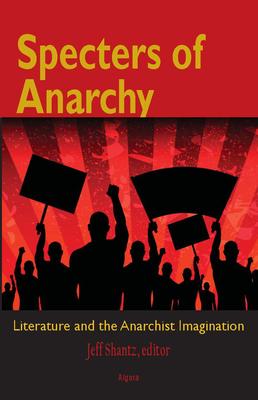
Specters of Anarchy

Specters of Anarchy

Literature and the Anarchist Imagination

$22.95 – $32.95Price range: $22.95 through $32.95

This lively volume featuring works by innovative scholars presents the compelling potency of anarchist literature through distinct voices. Anarchism has greatly influenced literary production and provided inspiration for a diversity of writers and literary movements.

Read More

Clear
Categories: PhilosophyAuthor: Jeff Shantz SKU: specters-of-anarchy Category: Philosophy Tags: Anarchism in literature, anarchist politics, anarchist theory, anarchy and art, B. Traven authorship, classic radical literature, dystopian fiction and politics, Emerson and Thoreau anarchism, freedom and resistance in fiction, James Joyce politics, Jeff Shantz, John Fowles French Lieutenant's Woman, literary criticism, literature and radical politics, Nineteenth century anarchism, Oscar Wilde anarchism, political fiction, radical social movements, Spanish anarchism novels, The Dispossessed Ursula Le Guin, Ursula Le Guin politics, V for Vendetta analysis, what is anarchism, writers and anarchism Author: Jeff Shantz

Available from

  • Description
  • More Description
  • Additional information
  • Reviews (0)

Sound Bite

Anarchy. The word alone conjures strong emotional responses.Anarchism is one of the most important, if maligned, radical social movements. In the 21st century, anarchist politics have enjoyed a significant revival, offering a positive vision of social change and an alternative to the injustice and inequality associated with states and corporate dominance. Yet anarchism remains misunderstood and misrepresented in mass media and government accounts that associate the term with chaos and disorder.

Despite the negative portrayals anarchism, in fact, has always been a movement of intense creativity. More than a political movement, anarchism has, for over a century, made important contributions to cultural developments, especially in literature and art. Often overlooked are the vital creative expressions of anarchism.

About the Book

This lively volume featuring works by innovative scholars presents the compelling potency of anarchist literature through distinct voices. Anarchism has greatly influenced literary production and provided inspiration for a diversity of writers and literary movements.

Edited by a longtime anarchist theorist, this exciting collection of engaging works highlights the rich articulations of anarchism and literary creations. It places anarchism at the center of analysis and criticism. The collection shows the richness of anarchist movements in politics and culture.

Authors examined include Octavia Butler, John Fowles, James Joyce, Ursula LeGuin, Eugene O'Neill, B. Traven, and Oscar Wilde, among others.

Specters of Anarchy examines critically the generally overlooked intersections, engagements, debates and controversies between literature and criticism and anarchist theories and movements, historically and in the present period. Synthesizing literary criticism with the theory and practice of anarchism, this book offers a re-reading of important literary and political works.

Anarchist politics is a major, and growing, contemporary movement, yet the lack of informed analysis has meant that the actual perspectives, desires and visions of this movement remain obscured. Lost in recent sensationalist accounts are the creative and constructive practices undertaken daily by anarchist organizers imagining a world free from violence, oppression and exploitation. An examination of some of these constructive anarchist visions, which provide examples of politics grounded in everyday resistance, offers insights into real world attempts to radically transform social relations in the here and now of everyday life.

Introduction

Culture and politics in the first decades of the twenty-first century are once again haunted by a specter that some had declared vanquished only a few decades earlier - the specter of anarchism. This is the very specter that haunted political and economic power holders in the first decades of the twentieth century and against which vast repressive resources (arrest, imprisonment, deportation, and execution) had been deployed in great acts of social exorcism. From the early 1990s, and particularly with the impetus of alternative globalization movements and uprisings against neoliberalism, anarchism as an explicitly self-identified force has enjoyed a rather incredible resurgence. In a period of less than 20 years anarchism has gone from appearing to be dead and buried as a political movement and idea to revive and become perhaps the most significant oppositional political force in Western liberal democracies.Despite the intervening passage of a century of time, it appears that anarchism remains widely misunderstood. Popular representations and perceptions of anarchism are based largely on fabrication, falsification, and fear as social mythologies continue to construct anarchism as a synonym for chaos and disorder. In some public proclamations political and economic elites present anarchy as even more than this - as another word for terrorism (in the Age of Anti-Terrorism). The image of the anarchist as a frightening presence has been played up in mass media representations that have focused on anarchist activities particularly during protests against meetings of global capital such as the World Trade Organization (WTO), Organization of American States (OAS), and World Bank (WB). Over the last decade and a half, sensationalistic media stories involving angry, black-clad, masked youth demonstrating against the global meetings of government and corporate power holders, often accompanied by property damage and running battles with police, has fueled a moral panic over anarchism similar to that which marked the beginning of the twentieth century and eventually found expression in the first Red Scare. Acts of direct action, or "uncivil" disobedience, especially where it is believed to involve damage to corporate property, attributed to so-called "black bloc" anarchists during global capitalist summits since the 1999 World Trade Organization meetings in Seattle have returned anarchists to the headlines and landed them on the covers of major national and international publications, including Time and Newsweek, as well as making them the subject of feature stories on leading news programs. In addition to this, police assaults on anarchists during economic summits, including the use of pepper spray, tear gas, and rubber bullets along with mass arrests, shootings, and even killings of anarchists have suggested to the general public that anarchists are indeed something to be feared - something against which force is necessary. This view has been reinforced in mainstream media depictions of anarchists as "criminals," "thugs," and "hooligans."In the popular imagination, anarchism is largely a phantom. The continued absence of any real, informed analysis and discussion of anarchist politics, popularly, has meant that the actual, as opposed to imagined, perspectives, visions, and activities of this major, and growing, contemporary movement remain obscured. Overlooked or ignored in recent sensationalized accounts are the creative and constructive practices undertaken daily by people who identify as anarchists as they pursue a world free from violence, oppression, and exploitation. A close examination of some of these constructive anarchist visions, which provide examples of politics (and cultures) grounded in everyday resistance, offers needed insights into real world attempts by individuals and collectives to radically transform social relations in the here and now of everyday life (while seeking broader social change).The works in this collection examine historical and contemporary engagements of anarchism and diverse expressions of cultural production. Together they show that anarchists have used various forms of literary production to express opposition to values and relations characterizing advanced capitalist (and socialist) societies while also expressing key aspects of the alternative values and institutions proposed within anarchism. Among favored themes are anarchist critiques of corporatization, prisons, and patriarchal relations as well as explorations of developing anarchist perspectives on revolution, ecology, sexuality, and mutual aid.

Table content

Table ontent

Introduction: The Anarchist Imagination: Literature/Culture/Anarchy

1. Wilde and the Victorian Mould: The Artist's Individualism through Anarchy

2. Anarchy, Ecology, and the Care of the Self: The Legacies of Emerson and Thoreau

3. Suspicious of the State: The Anarchist Politics of James Joyce

4. Representing Chaos: Spanish Anarchism in Literature

5. The Anarchist Imagination and the Materiality of Cultural Production: Anonymous Authorship in B. Traven

6. "The Freedom that Allows Other Freedoms to Exist": Anarchistic Influence in The French Lieutenant's Woman

7. "One Who, Choosing, Accepts the Responsibility of Choice": Ursula K. Le Guin, Anarchism, and Authority

8. Anarchy in Critical Dystopias: An Anatomy of Rebellion

9. Staging Anarchy: On Anarchism and Drama

10. What Things Could Come? Xenogenesis and Post-Anarchist Feminism List of Contributors

About the Book

Anarchism gets a bad rap. Politicians and media outlets tend to use the word as shorthand for chaos and violence, but this edited collection argues that anarchist thinking has quietly shaped some of the most significant literature of the past two centuries. Edited by anarchist theorist Jeff Shantz, this book gathers essays from a range of scholars who trace the anarchist imagination across fiction, poetry, and cultural criticism.

The writers examined here are a genuinely surprising lineup. Oscar Wilde's individualism gets read through an anarchist lens, connecting his critique of property, morality, and empire to his artistic vision. James Joyce's Ulysses turns out to carry real anarchist politics beneath its surface complexity. The American transcendentalists Emerson and Thoreau appear as forerunners of anarchist ecology and self-governance. Spanish anarchism gets explored through novelists like Blasco Ibañez and Valle-Inclán. The mysterious B. Traven, who deliberately obscured his own identity, becomes a case study in anarchist authorship itself.

The collection also covers more recent territory. John Fowles' The French Lieutenant's Woman, Ursula K. Le Guin's science fiction, and dystopian works like The Dispossessed, V for Vendetta, and The Matrix all get examined for how they imagine rebellion, authority, and freedom. Octavia Butler and Eugene O'Neill also feature in the wider discussion.

This is a serious but genuinely engaging book for anyone interested in radical politics, literary history, or the question of what literature can do when it refuses to accept the world as it is.

Additional information

Weight N/A
Book Type Ebook, ePub, Hard cover, Soft cover
Pages

296

Release Year

2015

BISAC I

POL042010 POLITICAL SCIENCE / Political Ideologies / Anarchism

Reviews

There are no reviews yet.

Be the first to review “Specters of Anarchy” Cancel reply

Your email address will not be published. Required fields are marked *

Related books

  • Mikhail Bakunin

    Mikhail Bakunin

    The Philosophical Basis of His Theory of Anarchism

    McLaughlin is concerned not so much with an explication of Bakunin’s anarchist position, as such, as with the basic philosophy which underpins it.

    Paul McLaughlin $22.95 – $29.95Price range: $22.95 through $29.95 Select options This product has multiple variants. The options may be chosen on the product page
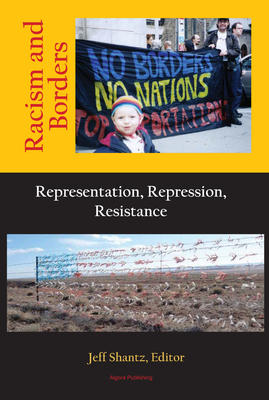
  • Racism and Borders: Representation, Repression, Resistance

    Racism and Borders: Representation, Repression, Resistance

    While policies like SB 1070, Arizona’s now infamous immigration legislation, have raised issues of racial profiling and policing practices, there have been few detailed analyses of broader practices of racialization and racism at borders more extensively.

    Jeff Shantz $19.95 – $29.95Price range: $19.95 through $29.95 Select options This product has multiple variants. The options may be chosen on the product page

Related products

  • Coping with Freedom

    Coping with Freedom

    Reflections on Ephemeral Happiness

    An approachable essay on personal freedom, this lively book is inspired by the author’s own 20 th century life experience as well as 18th century philosophers, and literary and historical references.

    Chantal Thomas $9.95 – $21.95Price range: $9.95 through $21.95 Select options This product has multiple variants. The options may be chosen on the product page
  • Time & Ego

    Time & Ego

    Judeo-Christian Egotheism and the Anglo Saxon Industrial Revolution

    What is the hidden thread connecting the biblical story of Joseph in Egypt, the philosophy of Jesus, and the birth of the Industrial Revolution?

    Claudiu A. Secara $1.00 – $14.95Price range: $1.00 through $14.95 Select options This product has multiple variants. The options may be chosen on the product page
  • Ortega's 'The Revolt of the Masses'

    Ortega’s ‘The Revolt of the Masses’

    and the Triumph of the New Man

    This book is first and foremost a detailed and meticulous study of Ortega y Gasset’s The Revolt of the Masses (1930). No other relevant, up-to-date books explore this thinker and his great work.

    Pedro Blas Gonzalez $22.95 – $29.95Price range: $22.95 through $29.95 Select options This product has multiple variants. The options may be chosen on the product page
  • The Path of Reason

    The Path of Reason

    A Philosophy of Nonbelief

    In today’s culture wars and the everyday struggle of individuals to make sense of the world around them, the question of how we can understand the world becomes a vital one. In order to make the best decisions in life, we need the best information.

    Bruce Smith $22.95 – $34.95Price range: $22.95 through $34.95 Select options This product has multiple variants. The options may be chosen on the product page
Algora Publishing

Algora Publishing is an independent publisher featuring top international authors on questions of global scope. Like any good oracle, we do not give straight answers.

  • Address:

    1632 1st Av. #20330, New York NY, 10028

  • Call Us:

    (212) 678-0232

  • Mail us:

    feedb@algora.com

Main menu
  • Homepage
  • About us
  • Shop
  • How to order
  • Contact us
Quik Links
  • FAQ’s
  • What our Authors Are Saying
  • Queries
  • Why Harry Potter?
  • Microsoft Word Settings
Subscribe to Our Newsletter


    Algora Publishing All Rights Reserved © 1992- 2026 - Website Designed and Developed by Algora Publishing