About the author

Anthony C. Patton

Author Anthony Patton combines a unique educational background, professional work, and life experience to tackle complex questions about human existence. Having studied both philosophy and mathematics before earning an MBA, he spent over thirty years working with the U.S. Air Force, the Department of Defense, and the Department of State in senior leadership roles across Latin America, Europe, and South Asia. In his books, Patton offers thoughts for human flourishing in the 21st century.

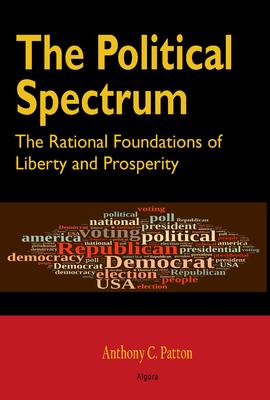
The End of Infinity

Where Mathematics and Philosophy Meet

Price range: $22.95 through $32.95

“My heart fluttered the first time I heard the paradoxical claim of a 19th-century mathematician who said infinity was real, that there was more than one type of infinity, and that not all infinities were the same size!

Read More

Sound Bite

The idea of infinity stands at the intersection of mathematics and philosophy. As da Vinci said, "Arithmetic is a computational science in its calculations, but it is of no avail in dealing with continuous quantity." The End of Infinity reviews the philosophical history of infinity, mathematics, numbers, and logic to demonstrate that the modern conception of infinity involves a logical and metaphysical contradiction that argues for a return to Aristotle's conception of potential infinity.

About the Book

"My heart fluttered the first time I heard the paradoxical claim of a 19th-century mathematician who said infinity was real, that there was more than one type of infinity, and that not all infinities were the same size! It was either one of the most absurd or one of the most important theories in intellectual history." That stunning assertion inspired Anthony Patton to investigate the issue from a variety of perspectives, leading to this book.

Here, we focus mainly on the philosophy of infinity; it does not require an extensive understanding of mathematics, although relevant terms and concepts are introduced and explained. From the late 19th to the early 20th century, great thinkers like Cantor, Frege, and Russell attempted to provide a new foundation for mathematics by replacing the intuitions of Kant with logic, rigorous definitions, and axiomatic set theory.

One of the results of their work was a new conception of infinity, which included the surprising claims that infinite sets exist, that there are different types of infinite sets, and that not all infinite sets are the same size.

However, the great logician Gödel proved that all axiomatic systems, like set theory, are necessarily incomplete and therefore cannot not provide a solid foundation for mathematics, evidenced by the fact that there are known mathematical truths that cannot be proven or disproven with set theory. Despite this setback, set theory continues to dominate modern mathematics, with limited attempts to reconsider its validity - until now.
About the Book

What does it really mean for something to be infinite? That question sits at the heart of Anthony C. Patton's ambitious and thought-provoking book, which traces the idea of infinity from ancient Greek philosophy all the way through modern mathematics. Patton opens with a confession: he was captivated — and slightly unsettled — when he first encountered the claim that not all infinities are the same size. That idea, developed by the 19th-century mathematician Georg Cantor, launched a revolution in how mathematicians think about numbers, sets, and the foundations of their discipline. But Patton argues it also introduced a serious philosophical problem that has never been properly resolved.

The book walks readers through a rich cast of thinkers: the Pre-Socratics, Plato, Aristotle, Schopenhauer, and then the modern giants Cantor, Frege, and Russell, who tried to rebuild mathematics on a foundation of pure logic and set theory. Patton is particularly sympathetic to Aristotle's older concept of "potential infinity" — the idea that infinity is a process, not a completed thing — and argues that the modern mathematical tradition abandoned this insight at its peril. Along the way, he tackles Cantor's famous diagonal argument, the concept of cardinality, infinitesimals, and the philosophical puzzle of real numbers.

Crucially, this is not a textbook. Readers without advanced math backgrounds can follow the argument, since Patton introduces and explains key terms as he goes. Anyone curious about the deep, strange questions hiding inside mathematics — questions about logic, language, and the nature of the infinite — will find this a genuinely rewarding read.

Additional information

Weight N/A
Book Type Ebook, ePub, Hard cover, Kindle, Soft cover
Pages

200

Release Year

LC Classification

BD411 .P38 2018

Dewey code

111/.6-dc23

BISAC I

PHI011000 PHILOSOPHY / Logic

BISAC II

MAT016000 MATHEMATICS / Infinity

BISAC III

MAT028000 MATHEMATICS / Set Theory

Reviews

There are no reviews yet.

Be the first to review “The End of Infinity”

Your email address will not be published. Required fields are marked *

Related books