About the author

Anthony C. Patton

Author Anthony Patton combines a unique educational background, professional work, and life experience to tackle complex questions about human existence. Having studied both philosophy and mathematics before earning an MBA, he spent over thirty years working with the U.S. Air Force, the Department of Defense, and the Department of State in senior leadership roles across Latin America, Europe, and South Asia. In his books, Patton offers thoughts for human flourishing in the 21st century.

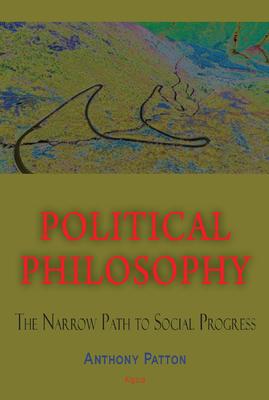
Political Philosophy

The Narrow Path of Social Progress

Price range: $22.95 through $32.95

While we might all love for everyone to get along, to help the needy, and for the wars to end, we need to explain how people can reach this point in their biological growth and development by promoting social progress.

Read More

Sound Bite

What do we mean by "social progress" and how do we know which way to go? How do the values of liberty and group loyalty, or sharing versus rewards for achievement, come into play at different stages of civilization's development?  The author shows how our shared set of cohesive and consistent values built the successful Western culture we enjoy today, which is what allows us the luxury of helping others to a very great extent. He convincingly argues for the family and private property as key elements in building a successful society.

About the Book

While we might all love for everyone to get along, to help the needy, and for the wars to end, we need to explain how people can reach this point in their biological growth and development by promoting social progress.

Liberals believe social conservatives are oppressive white men who worship outdated ideas, and social conservatives believe liberals live in a world where nothing is sacred; life, religion, the nation... We can move ahead if we learn from each other and make decisions based on more than our feelings.

Looking at population growth and increased societal complexity, 'wants' versus 'needs,' and what is fair and what works, the author ponders how to balance the interests and responsibilities of the individual and of society as a whole. In that context, issues that divide Western society today, including immigration and refugee policies, gender issues, and capitalism versus socialism, can be examined critically to see why certain choices are more promising than others, despite some very well-intended counterarguments.

Drawing on thinkers from Heraclitus to Hegel and Haidt, the author presents well-reasoned arguments for a moderate conservative outlook on life and offers readers new ways to think about and evaluate their own arguments.
About the Book

Anthony C. Patton's Political Philosophy: The Narrow Path of Social Progress tackles one of the hardest questions in public life — how do societies actually move forward without tearing themselves apart? Patton builds on his earlier work, The Political Spectrum: The Rational Foundations of Liberty and Prosperity, to argue that genuine social progress requires more than good intentions. It demands a clear-eyed understanding of how societies produce and distribute resources, how individuals relate to their communities, and why certain values have made Western civilization function as well as it has.

The book is organized as a philosophical journey, moving from big-picture ideas about human nature and evolution down to specific flashpoints: private property, equality, liberty, multiculturalism, and identity politics. Patton draws on thinkers like Jonathan Haidt, whose work on moral communities opens the book, as well as ideas from game theory, including Nash Equilibrium, and Nassim Taleb's concept of antifragility. He challenges both liberal and conservative orthodoxies, arguing that the left too often prioritizes redistribution over production, while the right struggles to see how rigid thinking blocks necessary adaptation.

What makes this book readable is that Patton keeps returning to practical stakes. His "leaking bucket" analogy for resource management cuts through a lot of political noise. He tackles immigration, gender issues, capitalism versus socialism, and the tension between individual freedom and collective responsibility — not to score points but to map the narrow path where real progress becomes possible. Readers interested in political theory, social philosophy, or simply understanding why modern democracies feel so stuck will find this a challenging and rewarding read.

Additional information

Weight N/A
Book Type Ebook, Hard cover, Soft cover
Pages

212

Release Year

BISAC I

PHI019000 PHILOSOPHY / Political

BISAC II

POL042020 POLITICAL SCIENCE / Political Ideologies / Conservatism & Liberalism

Reviews

There are no reviews yet.

Be the first to review “Political Philosophy”

Your email address will not be published. Required fields are marked *

Related books