




Sound Bite
Do you have a right NOT to have children? Enormous contributions to humanity have been made by individuals who did not reproduce. Arguably, society has a need for people with time to think, time to explore and invent. J. O. Raber has compiled an original list of such individuals, providing food for thought. This painstakingly compiled list contains mostly historic individuals, illustrating how many of our cultural and scientific landmarks are the gifts childless people have bequeathed to humanity.
About the Book
Choosing to remain 'child-free' or 'childless' is something that sparks various reactions. This issue engages feminists, ecologists, the religious right, the child-free community and parents who take offense at the child-free community.
But not everyone has actually given it deep thought. Life without children can have many benefits, both on a personal level and for humanity and the planet; but the topic tends to ignite highly emotional controversy more than rational debate.
The ideas and viewpoints discussed in this book may spur some thinking among those considering becoming parents, feminists, ecologists, the religious right, and the child-free community. The Internet is full of lists of people who are reported as not having had children; some of these lists contain errors. Here, the author has added dates and places of birth and death, to aid in verification.
Web sites and books on the issue of whether to have children focus mainly on the personal side of the issue, often leaving the reader with the feeling that non-procreation is purely egocentric hedonism ' whereas 'child-free' web sites tend to flame parents.
This book dispassionately presents the names of 700 notable men and women from various walks of life who did not have children and who are unlikely to have been able to make their extraordinary contributions to humanity if they had had children to raise, and includes a host of philosophical arguments offered by such people explaining their decision not to have children.
Introduction
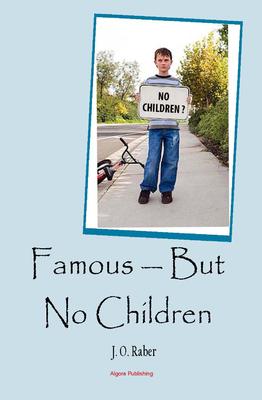
In a world that often prescribes the traditional path of parenthood as the ultimate goal, Famous – But No Children asks: Do we have a right to NOT have children?
J. O. Raber delves into the nuanced and sometimes contentious debate surrounding the choice to remain child-free or childless. This book serves as a thought-provoking guide for anyone contemplating the implications of such a decision, sparking important discussions that resonate across various communities.
The Right to Choose: Raber begins by emphasizing the significance of personal choice in the conversation about parenthood. With a balanced approach, the author addresses the myriad reasons individuals may opt for a child-free lifestyle. From environmental concerns to financial stability, the motivations are diverse and deeply personal. The narrative encourages readers to reflect on their own values and beliefs surrounding parenthood, inviting them to consider whether societal expectations align with their personal aspirations.
Perspectives that Matter: The author brings to light a range of perspectives, including those from feminists, ecologists, the religious right, and the child-free community. By presenting these viewpoints, Raber creates a platform for understanding the complexity of the child-free choice. He examines how cultural norms influence perceptions of parenthood and questions the assumptions often associated with being childless. This inclusive approach not only broadens the conversation but also fosters empathy for those whose choices differ from societal norms.
A Re-Consideration of Social Norms: As the book unfolds, Raber takes a closer look at the social pressures that shape decisions around having children. The book addresses the stigma often attached to being child-free, challenging the notion that fulfillment can only be found through parenthood. Dissecting these stereotypes, readers are empowered to reclaim their narratives, emphasizing that the path to happiness is not one-size-fits-all. This critical examination of societal expectations invites readers to engage in introspection about their choices and desires.
Thoughtful Reflections: The dialogue throughout the book invites readers to think critically about their own beliefs regarding reproduction and family life. Raber asks essential questions that challenge conventional wisdom: What does it mean to lead a fulfilling life? Can we find purpose outside of traditional family structures? By exploring these themes, Famous – But No Children not only raises awareness but also encourages individuals to embrace their unique journeys.
Bridging Communities: Importantly, the book serves as a bridge between various communities, fostering dialogue among those with differing views. Raber’s respectful and thoughtful treatment of these perspectives creates a space for meaningful conversation, allowing readers to engage with ideas that may be foreign to them. This book is not just for the child-free community; it’s for anyone curious about the implications of parenthood and the value of choice.
J. O. Raber suggests we move toward understanding and respecting individual choices in the face of societal norms. Through engaging discussions and insightful reflections, Raber empowers readers to embrace their decisions, whatever they may be. This compelling read encourages us all to reflect on our beliefs about family, happiness, and the right to choose our paths. By challenging conventions, Raber’s work not only enlightens but also inspires readers to carve out their own definitions of fulfillment.


Reviews
There are no reviews yet.