




Sound Bite
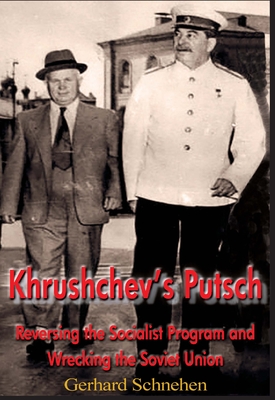
In a compact book built on quotes from primary sources, Schnehen shows that Khrushchev essentially pulled off a coup, eliminating Stalin and then Beria. This opened the future to a radical shift away from the policies that had enabled the Soviet Union to make the hair-raising jump into the modern industrialized world and pulled it through the devastating war. Khrushchev brought havoc to the Soviet economy and society.
About the Book
In Khrushchev’s Putsch, Gerhard Schnehen delivers a comprehensive analysis of one of the most pivotal events in Soviet history—the political maneuvering that led to the undoing of the socialist program and the eventual collapse of the Soviet Union. This gripping narrative dissects Nikita Khrushchev’s rise to power, exploring how his policies reshaped the ideological and economic landscape of the USSR.
A Critical Turning Point in Soviet History: Schnehen meticulously traces the events following Joseph Stalin’s death, examining how Khrushchev orchestrated a political coup that overturned foundational socialist policies. His controversial de-Stalinization campaign and economic reforms destabilized the USSR, weakening its global standing. The book unveils Khrushchev’s role in undermining collectivized agriculture, fostering bureaucratic mismanagement, and promoting capitalist tendencies within the socialist framework.
Unmasking Political Intrigue: Through archival research and expert analysis, Schnehen uncovers the covert power struggles within the Soviet leadership. Readers gain a rare glimpse into the secret meetings, shifting allegiances, and behind-the-scenes conflicts that characterized this tumultuous era. Khrushchev’s tactical maneuvering to sideline political opponents while consolidating authority is vividly detailed, making this book a compelling political thriller.
Economic Reforms and Their Consequences: The author explores how Khrushchev’s economic policies, including the infamous Virgin Lands Campaign and industrial decentralization, disrupted Soviet productivity. His failure to balance agricultural and industrial priorities led to recurring food shortages and widespread dissatisfaction. Schnehen’s critical examination highlights the long-term economic consequences that reverberated throughout the Soviet bloc.
The Ideological Fallout: Khrushchev’s Putsch also scrutinizes the ideological shifts triggered by Khrushchev’s leadership. His denunciation of Stalin at the 20th Party Congress shattered the Soviet Union’s ideological unity, emboldening opposition movements within Eastern Europe and sparking a crisis of confidence among socialist allies. Schnehen illustrates how these ideological fractures played a decisive role in the USSR’s eventual disintegration.
A Scholarly Yet Accessible Analysis: Written with precision and clarity, Schnehen’s work is both an academic investigation and a narrative-driven account. The book is essential reading for historians, political scientists, and anyone intrigued by Soviet history, Cold War politics, and the ideological battles that defined the 20th century.
Khrushchev’s Putsch challenges conventional narratives about Soviet history by spotlighting the destructive policies and power plays that hastened the USSR’s downfall. It is a compelling examination of how political ambition, economic mismanagement, and ideological conflict reshaped the modern world.


Reviews
There are no reviews yet.