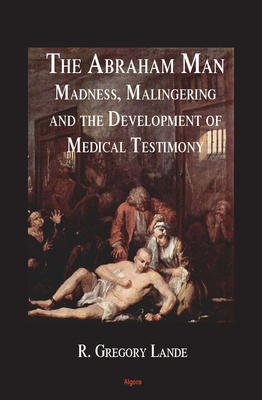
About the author

R. Gregory Lande

Dr. Lande is a forensic psychiatrist. A retired colonel from the US Army Medical Corps, he is the author of numerous medical and historical articles, chapters, and books.  

The Abraham Man

Growth and Development of Forensic Psychiatry

Price range: $23.95 through $33.95

Some of the most celebrated civil and criminal trials in American history were argued under the shadow of the Abraham Man. Readers will delight in the detailed stories of long forgotten legal cases which bring the antics of the Abraham Man to life.

Read More

Sound Bite

The Abraham Man is a fascinating story unfolding during the Civil War era. The trials of these men form part of the foundation of medical forensic psychiatry.

'Abraham Man' was a derisive term affixed to persons faking insanity. The fraudulent portrayal of insanity, and every sort of imaginable illness and injury, plagued America's judicial system at a time when men had good reason to avoid the war, on top of the usual motivations to shirk responsibility one way or another. By tracing the faint footsteps of the Abraham Man -- and Woman, who had her own reasons for evading --, the modern foundation of American medical legal jurisprudence becomes evident.

About the Book

Some of the most celebrated civil and criminal trials in American history were argued under the shadow of the Abraham Man. Readers will delight in the detailed stories of long forgotten legal cases which bring the antics of the Abraham Man to life. Through the process, readers will follow the careers of notable Civil War surgeons whose post-war professional development shaped the future of modern mental health care. In addition, the reader will learn about the promise of the asylum movement, prominent practitioners of the era, the politics, and eventual decline of institutional mental health care.Both readers and libraries will find The Abraham Man a refreshing, authoritative text replete with primary source documentation. The engaging narrative deftly weaves the history of science in the 19th century with evolving trends in legal practice. Throughout this period, the budding relationship between doctors and lawyers fashioned the foundation of modern medical legal practice. At every step along the path the Abraham Man sowed confusion and controversy, paradoxically contributing to more rigorous medical practice.The book will clearly tap into the public's modern fascination with forensic medicine. Professional readers, such as lawyers, doctors, and psychologists, will find The Abraham Man a valuable historical reference which still rings true after 150 years. Civil War aficionados will discover a fresh perspective and 'the rest of the story' about some famous soldiers. Medical history buffs will be enlightened by the devices and stratagems doctors employed to uncover malingering, in many cases the fore runners of modern diagnostic technologies.

About the Book

Long before anyone had heard of forensic psychiatry, there was the Abraham Man. The term dates back to the fifteenth century and described a particular kind of con artist — someone who faked mental illness, seizures, or other ailments to gain sympathy, avoid punishment, or dodge military service. R. Gregory Lande traces this figure across several centuries, but the heart of the book belongs to nineteenth-century America, where malingering and medicine collided in courtrooms, army camps, and sprawling insane asylums.

Lande shows how the constant challenge of detecting fakers actually pushed medical science forward. Military surgeons dealing with Civil War soldiers who were shamming illness developed sharper diagnostic tools and, after the war, many of them became leading voices in the treatment of mental disorders. Figures like William Hammond and others who shaped early American psychiatry appear throughout, along with historical names such as Mesmer, Benjamin Rush, and Franz Gall, all of whom had to contend with fraudsters exploiting the latest medical theories.

Some of the most gripping sections cover contested wills and high-profile criminal trials where competing doctors argued over whether defendants were genuinely insane or simply skilled actors. The rise of America's great asylum movement gets serious attention too, including how those institutions attracted the very impostors they were meant to identify and confine.

This is a genuinely surprising history of forensic psychiatry and medical testimony that makes a compelling case: the fake madman helped create the science of detecting real madness.

Additional information

Weight N/A
Book Type Ebook, ePub, Hard cover, Soft cover
Pages

272

Release Year

BISAC I

PSY014000 PSYCHOLOGY / Forensic Psychology

Reviews

There are no reviews yet.

Be the first to review “The Abraham Man”

Your email address will not be published. Required fields are marked *