About the author

Musa Khan Jalalzai

Musa Khan Jalalzai is a journalist whose experience includes over 25 years of extensive research in political analysis, Afghanistan, terrorism issues, and human trafficking. His articles have been published by The New Yorker, the New York Times, and Moscow Times (English-language daily). He has published several books studying sectarian and ethnic violence, policing, and terrorism in various parts of the world, as well as the increasing crime, corruption and instability in Pakistan, Afghanistan and the region.
During the First Gulf War (1991-1993) Musa Khan Jalalzai was a research scholar at the Pakistan Institute of National Affairs focusing on Persian Gulf politics. He was Executive Director of the Daily Outlook, Afghanistan (2005-2009), and regularly publishes articles in Pakistan’s daily The Post. He has a regular column in the Daily Times (Lahore, Pakistan) and The New Nation (Bangladesh). Mr. Jalalzai has published several books with Algora focusing on Pakistan, Afghanistan, and questions of international security, law enforcement, and the global intelligence war.

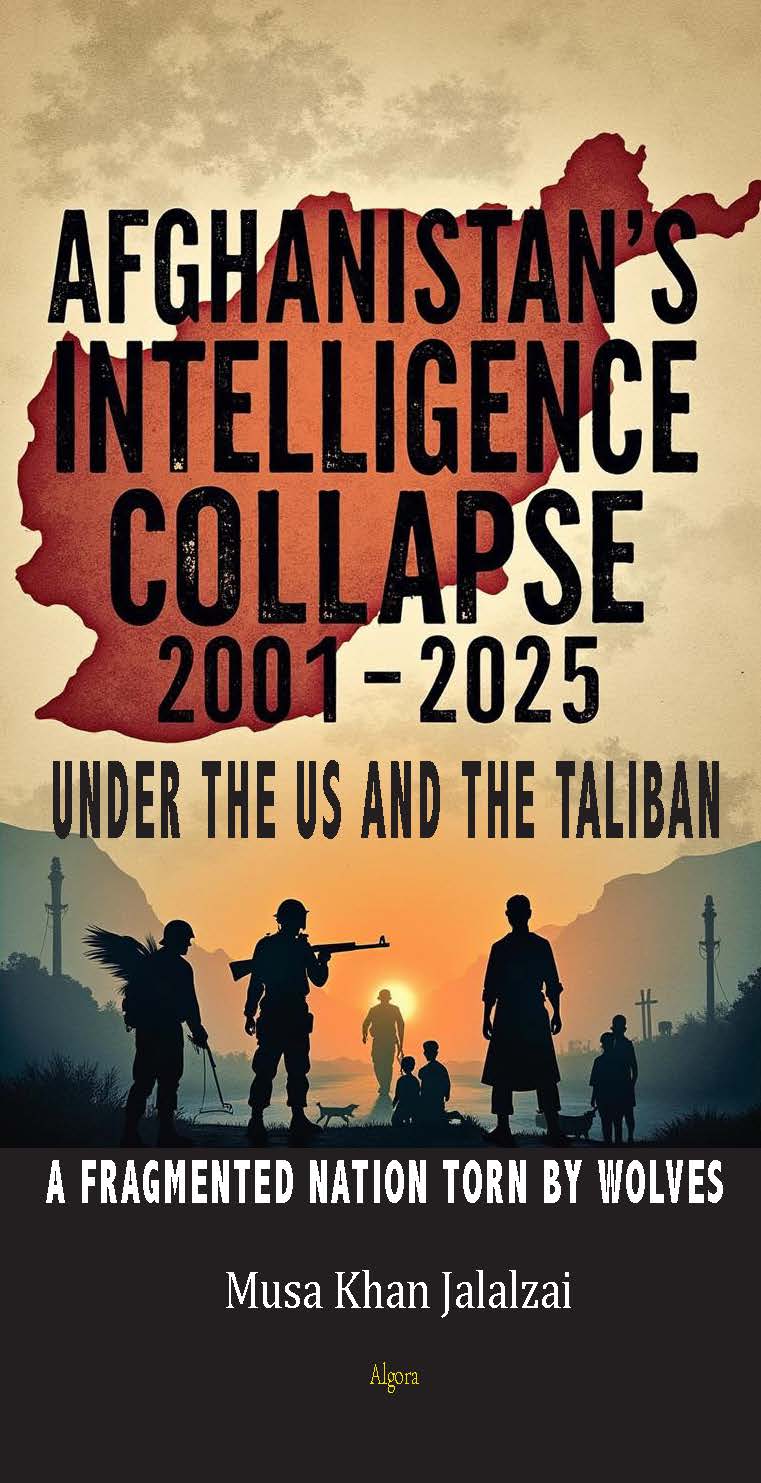
Afghanistan’s Intelligence Collapse 2001–2025

A Fragmented Nation Torn by Wolves

Price range: $19.95 through $29.95

Written by senior analyst Musa Khan Jalalzai, this detailed work gives an analysis of the National Directorate of Security (NDS) and unravels the factors contributing to its collapse, including corruption, political infighting, and external influences.

Read More

Sound Bite

Afghanistan's Intelligence Collapse provides a detailed look at Afghanistan's history through the perspective of its intelligence agency. During the US/NATO occupation of Afghanistan and after the withdrawal, under the Taliban, the Afghan security infrastructure essentially disintegrated. This book discusses intelligence and security issues under the West and then the Taliban.

About the Book

Written by senior analyst Musa Khan Jalalzai, this detailed work gives an analysis of the National Directorate of Security (NDS) and unravels the factors contributing to its collapse, including corruption, political infighting, and external influences.

The book examines the reasons behind the fall of the National Directorate of Security (NDS) within the country's complicated social and political environment.Jalalzai explains how corruption, political conflicts, and outside influences contributed to the collapse of the NDS.

He also highlights the fear and uncertainty experienced by intelligence workers and ordinary citizens during this time and, for the many who assisted the US and NATO, their perilous fate since the West pulled out, leaving them behind.

The book goes beyond just recounting events; it raises important questions about building stable governments in conflict zones and the need for inclusive leadership.

This work is useful for policymakers, scholars, and anyone interested in understanding the challenges Afghanistan faces in achieving stability and identity. It offers lessons from the NDS's difficulties and discusses what they mean for counter-terrorism efforts in the region. Understanding this history is important for working toward a more peaceful future.
About the Book

For more than two decades, Afghanistan's security and intelligence apparatus went through dramatic rises and catastrophic falls — and Musa Khan Jalalzai has written one of the most detailed accounts of how it all unraveled. Covering the period from the US-led invasion in 2001 through Taliban rule up to 2025, the book centers on the National Directorate of Security (NDS), Afghanistan's main intelligence agency, and traces exactly how it collapsed under the weight of corruption, ethnic and sectarian loyalties, political infighting, and relentless interference from foreign powers.

Jalalzai doesn't shy away from uncomfortable specifics. He examines war crimes linked to NDS figures like Engineer Rahmatullah Nabil, the role of Pakistan's ISI in shaping — and destabilizing — Afghan intelligence networks going back to 1992, the CIA's direct connections to units like the Khost Protection Force, and the systematic abuse of civilians by US-funded militias. The burning of Qurans at Bagram Air Base and the abandonment of roughly 12,000 Afghan intelligence operatives after the 2021 withdrawal are treated not as footnotes but as serious moral and strategic failures.

The book also takes a hard look at Taliban intelligence after the takeover — surveillance networks, internal rivalries between Kandahari and Haqqani factions, and the growing influence of groups like Islamic State Khorasan (IS-K) and the Tehrik-i-Taliban Pakistan (TTP). For anyone trying to understand why Afghanistan's security institutions failed so completely, or what that means for state-building in conflict zones more broadly, this is essential and sobering reading.

Additional information

Weight N/A
Pages

236

Release Year

Book Type Ebook, Hard cover, Soft cover

Reviews

There are no reviews yet.

Be the first to review “Afghanistan’s Intelligence Collapse 2001–2025”

Your email address will not be published. Required fields are marked *

Related books