About the author

Claudiu A. Secara

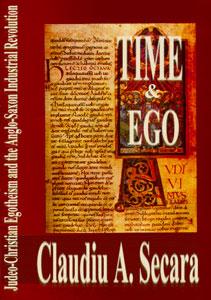
The author, after successful careers in the socialist East and in the capitalist West, analyzes worldwide political and economic developments of the past decades, particularly economic change in the former Soviet Union and Eastern Europe. Claudiu A. Secara suggests that Russia will be reinvigorated by compromising both models — the old communist orthodoxy as well as the new casino capitalism, which should bring Russia back to “socialist capitalism,” through which the country may well become the dominant power in a Eurasian commonwealth within a new world order quite different from the one most Americans imagine.Secara graduated from the University of Bucharest with an advanced degree in Philosophy and Political Economy. He worked as a journalist in Bucharest for several years before resigning over the issue of journalistic independence; the next several years he devoted to travel and independent scholarship, teaching, odds jobs, reading and writing.Later he bailed out of the peasant-socialist cum “state-capitalist” system entirely. He arrived in New York in 1983 as a political refugee and earned a Master’s degree in Political Science from New York University. He earned a doctorate in International Business and a doctorate in Information Systems from Pace University, providing consulting services in international business and computer technologies for clients such as Panasonic, Bankers Trust, and Deutsche Bank. Secara departed from his consulting work at the World Trade Center in New York, in good time, and turned again to full-time research and writing. He wrote Time & Ego: Judeo-Christian Egotheism and the Anglo Saxon Industrial Revolution, a philosophical essay, Post-Soviet Euroslavia,  and the broader work, The New Commonwealth: From Bureaucratic Corporatism to Socialist Capitalism. He is also involved with Algora Publishing.Secara combines the talent of what was once called ‘reading Pravda between the lines’ with a classical education and independent analysis. He remains a self-described socialist, atheist, committed to enlightenment and liberty of thought.

Sound Bite

In Time & Ego, Claudiu A. Secara presents a radical new history of the ideas that created the modern world. The book argues that the Anglo-Saxon Industrial Revolution was not merely a product of economic and technological forces, but the culmination of a philosophical journey that began with ancient Judeo-Christianity.

Secara traces this intellectual lineage from the pragmatic, “anti-religious” core of the Old Covenant and the humanist teachings of Christ to the revolutionary thought of 13th-century philosopher John Duns Scotus. It was Scotus's radical emphasis on the individual will that gave birth to a uniquely Anglo-Saxon empiricism, fostering the spirit of practical innovation that directly fueled the Industrial Revolution. A challenging and deeply insightful work, Time & Ego reveals the surprising connections between religion, philosophy, and the birth of Western industrial civilization.

About the Book

What is the hidden thread connecting the biblical story of Joseph in Egypt, the philosophy of Jesus, and the birth of the Industrial Revolution? In Time & Ego, Claudiu A. Secara offers a bold and far-reaching answer, arguing that the foundations of the modern West lie in a unique intellectual tradition he terms “Judeo-Christian egotheism.”

Secara begins by re-evaluating the Old Covenant not as a transcendental faith, but as a sophisticated “economic culture” built on rational principles, community survival, and the strategic management of time. This worldly, “anti-religious” spirit was further radicalized by Jesus Christ, who is presented here as a humanist philosopher fighting against empty ritual and superstition. His teachings, focused on objective reality and human potential, are shown to be a precursor to modern materialist thought.

The book identifies the pivotal turning point in the 13th-century philosophy of John Duns Scotus. His radical emphasis on the primacy of the individual will over universal reason shattered the scholastic consensus and established a new foundation for knowledge. According to Secara, this doctrine became the seed of a distinctly Anglo-Saxon empiricism, flowering in the work of thinkers like Francis Bacon and John Locke. It was this philosophical heritage, with its focus on observation, experimentation, and practical application, that cultivated the innovative spirit necessary for the Industrial Revolution to take root in England.

Time & Ego is a profound work of intellectual history that challenges conventional narratives by linking the abstract debates of medieval philosophers directly to the economic and technological forces that shaped our world.

About the Book

What drove the Industrial Revolution? Most historians point to coal, steam engines, and capital markets. Claudiu A. Secara has a different answer. In this provocative intellectual history, he argues that the Anglo-Saxon Industrial Revolution was the end product of a philosophical and religious journey stretching back thousands of years — one rooted in what he calls "Judeo-Christian egotheism," the idea that the individual human self became, over centuries, a kind of god.

Secara starts with a bold reinterpretation of the Old Testament, reading Judaism not as a mystical faith but as a practical "economic culture" — rational, community-focused, and deeply concerned with managing time and survival in the material world. He then turns to Jesus, presenting him not as a supernatural figure but as a humanist philosopher whose teachings pushed back against empty ritual and toward objective reality and human agency. Far from being opposites, these two traditions are shown to share a hard, worldly core.

The book's most original move comes in its treatment of the 13th-century Scholastic philosopher John Duns Scotus, whose emphasis on individual will and the primacy of the subject Secara identifies as the crucial intellectual hinge connecting ancient religious thought to modern capitalism and industrialization. It was this philosophical tradition, Secara argues, that gave Anglo-Saxon culture its distinctive drive.

Dense but rewarding, this is a book for readers who want to think seriously about where modernity came from and why the West developed the way it did.

Additional information

Weight N/A
Book Type Ebook, ePub, Soft cover
Pages

122

Release Year

LC Classification

BL53.S42

Dewey code

190 21

BISAC I

PHI013000

BISAC II

PHI009000

Reviews

There are no reviews yet.

Be the first to review “Time & Ego”

Your email address will not be published. Required fields are marked *

Related books