


Sound Bite
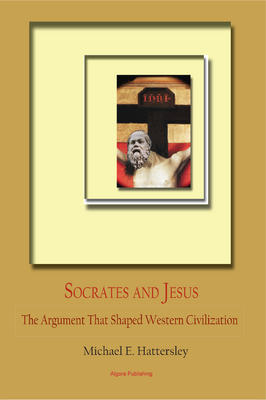
Western civilization was for centuries held together by the glue of Christianity, the religion founded upon the teachings and actions of Jesus, to the extent that it may be possible to infer them from the written record. This book has grown out of the conviction that the methods of history in particular and of the sciences secondarily have not been applied forcefully enough to an investigation of Jesus. We will scrutinize this written record and see how much we actually know.
About the Book
This book is part confession, a literary genre that goes back to Augustine, bishop of Hippo in North Africa and Catholic saint. Yet my agenda differs from his. Augustine lived at a time when the Christian Church was beginning to flex its muscles and make bold claims. Today we live in the "twilight of the gods," to borrow the title of one of Friedrich Nietzsche's last works. Religion as a general construct peaked long ago, probably before the Enlightenment, and is now in retreat. This period of decline and demise makes essential at long last a realistic treatment of Jesus of Nazareth. As an Italian by birth and upbringing I was early baptized into the Catholic Church. I'm not sure how long I might have held on to these beliefs, but then, at age 43, my mother died. I was 15 at the time and didn't know how to reconcile the notion of a good, just, loving God with such a tragedy. I eventually found what I believe to be the most probative way of examining Jesus. I want to know whether the Jesus of the written records can withstand the scrutiny of the sciences and history. This task will form the core of this book. A very long time ago, humans had little more than faith to guide them. I do not intend to write for this mindset but to entertain other methods of understanding what we call reality. The sciences, philosophy, and history will be our guides. I hope that their rigor will appeal to those who remain intellectually curious and open-minded.
Table content
Preface4Introduction5Chapter 1. Toward an Understanding of the Sources9� The Sources9� Principles of Reasoning9� Method and the Historian10� Historical Methods and the Nature of the Sources about Jesus13� Naming the Gospels18� Jesus and Socrates20� The Method of Doubt21� The Canonical Gospels23� The Gnostic Accounts27� Pagan Sources29Chapter 2. The Birth of Jesus30� The Virgin Birth: Reproductive Biology31� The Logic of the Virgin Birth33� Bethlehem and the Birth Narrative34� The Larger Literary World36� Antiquity in the Larger Perspective41� The Absence of the Virgin Birth in Mark, John and Other Christian� � � Literature45Chapter 3. Jesus' Childhood49� The New Testament49� Outside the New Testament51� The Infancy Gospel of Thomas53� The Gospel of Pseudo Matthew63� Emil Bock's The Childhood of Jesus63� Miracles and Jesus' Childhood64Chapter 4. The Ministry65� John the Baptist and Jesus66� The Temptation69� A Ministry of Miracles72� Jesus as Communicator77� An Odd Ministry81� Ministry and Anti Semitism81Chapter 5. Death and Resurrection83� The Last Supper83� Arrest and Trial86Chapter 6. Theologians and One Scientist Take the Offensive98� Wolfhart Pannenberg and Richard Swinburne98� Richard Swinburne108� Gerald Schroeder113Chapter 7. The Death of God118� Jesus, the Notion of God, and the Universe118� In the End124Bibliography128



Reviews
There are no reviews yet.